HEATEnquiry list 0Start a project ↗
QUALITY / EVIDENCE / APPLICATION

Quality requirements & supporting documentation.

Quality planning connects the selected component, material and garment application with the documentation and assessments your project requires. Explore certification scope, material and market requirements, and performance testing for apparel trims.

METAL HARDWARERESIN & CERAMICSTEXTILE TRIMSLEATHER DETAILSPAPER & PACKAGING
CREDENTIALS & TRACEABILITY

Certifications and supply-chain evidence.

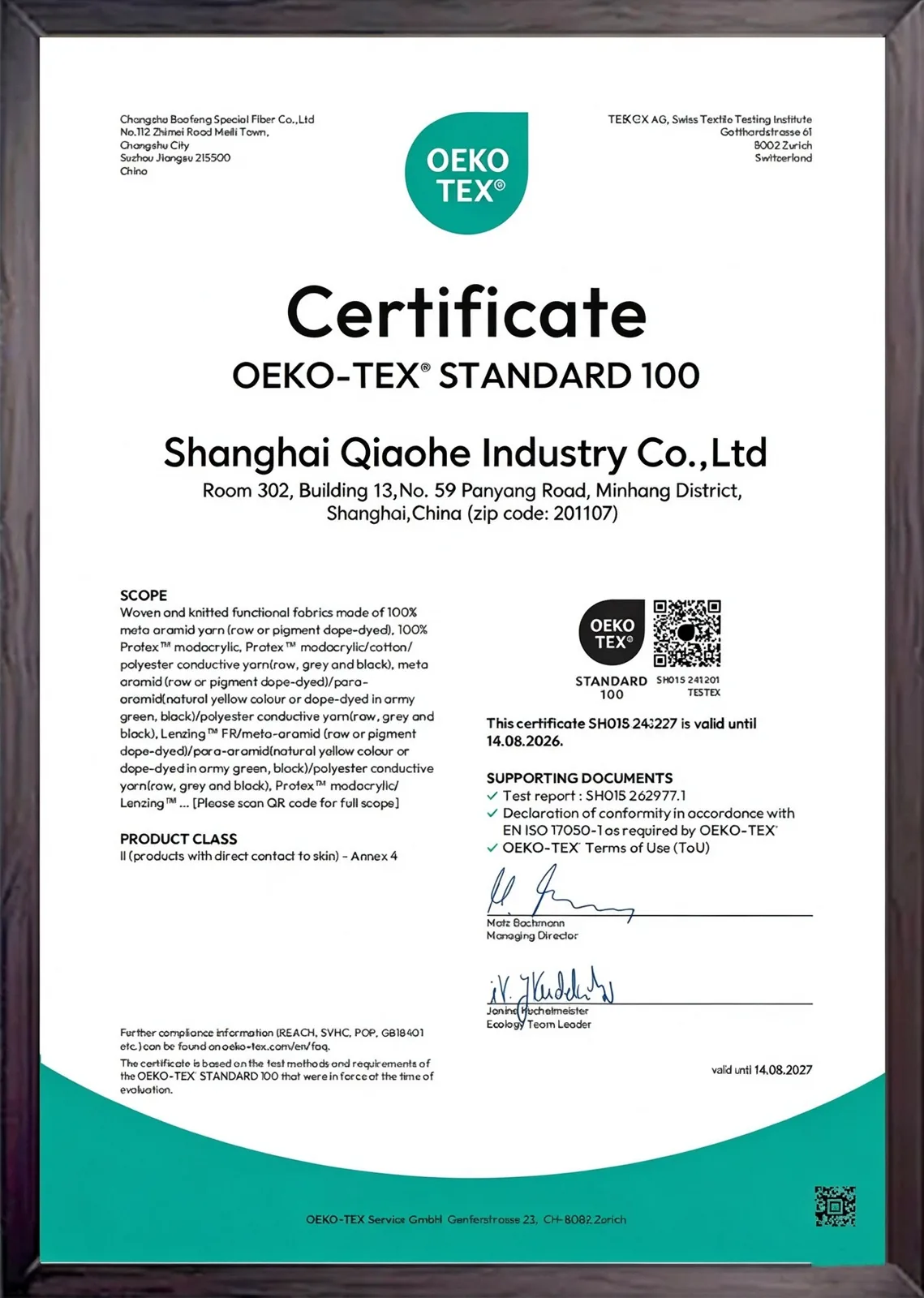
OEKO-TEX® STANDARD 100
CERTIFICATION / PRODUCT

OEKO-TEX® STANDARD 100

Product-level textile and accessory documentation connects a component with the scope and conditions of the applicable certificate. Review the named product group, materials, colours and intended use when selecting tapes, labels, zippers, buttons or other garment details. The document holder, certificate number, covered products and validity form part of the project documentation.

Official background ↗
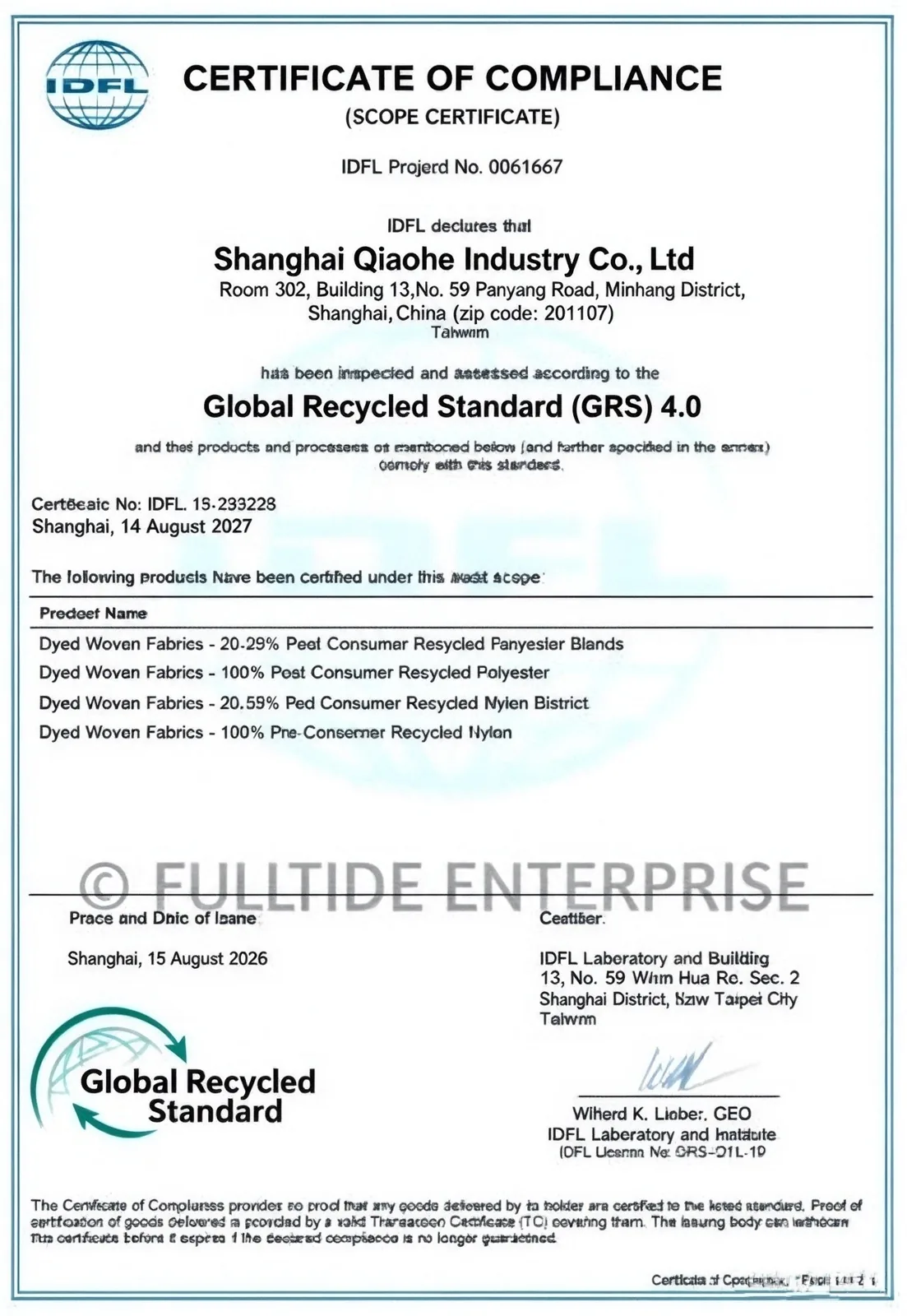
Global Recycled Standard · GRS
CERTIFICATION / RECYCLED MATERIAL

Global Recycled Standard · GRS

Recycled-material sourcing involves both the material input and its journey through the supply chain. Scope certificates identify covered activities and product groups; transaction documentation connects an eligible shipment with the relevant claim. Define the requested recycled content and product description before agreeing the order documentation and labelling requirements.

Official background ↗
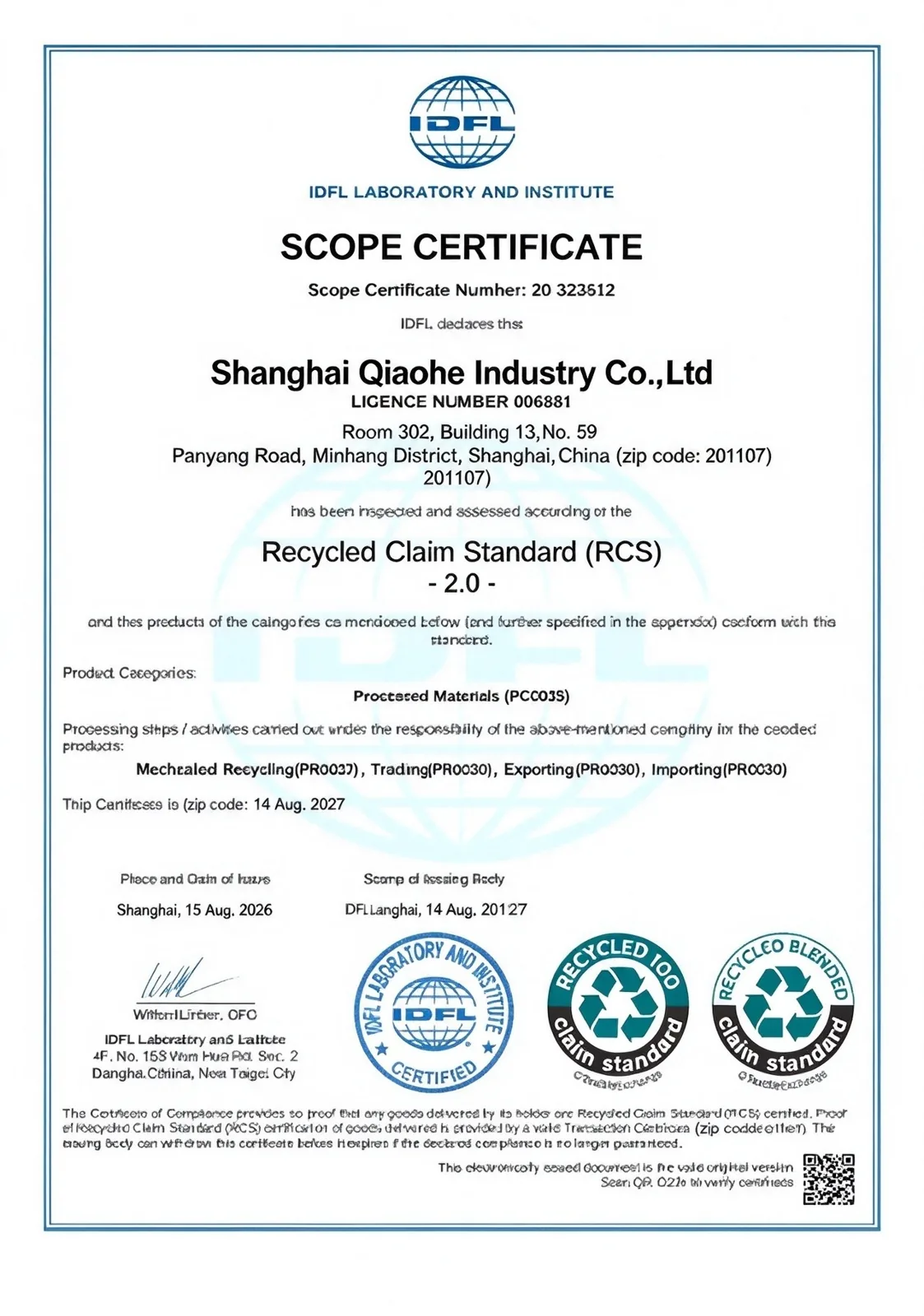
Recycled Claim Standard · RCS
CERTIFICATION / RECYCLED MATERIAL

Recycled Claim Standard · RCS

Recycled-input documentation supports traceability from an identified material source through the relevant supply chain. Match the material description, supplier, covered activity and order records to the component being purchased. Recycled content, recyclability and environmental impact are separate attributes and should be described individually.

Official background ↗
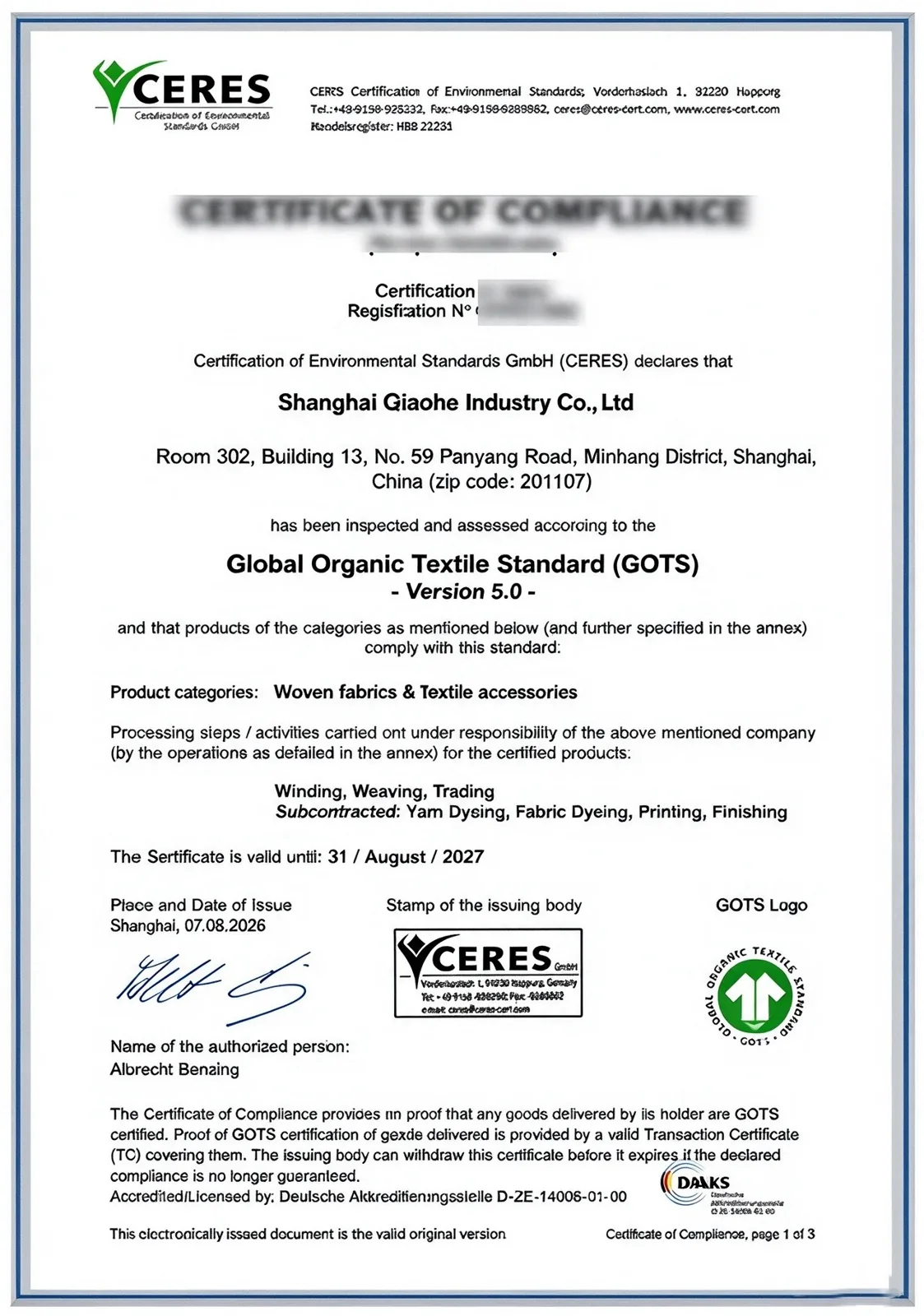
GOTS-related textile & accessory evidence
CERTIFICATION / ORGANIC TEXTILES

GOTS-related textile & accessory evidence

Organic textile projects require a clear distinction between the textile product, the accessory and the relevant supply-chain documentation. Cotton tapes, labels and garment fastening details should be reviewed within the requirements of the intended finished product. Discuss the requested organic claim, accessory requirements, material composition and documentation route at the briefing stage.

Official background ↗
Leather Working Group · LWG
SUPPLY CHAIN / LEATHER

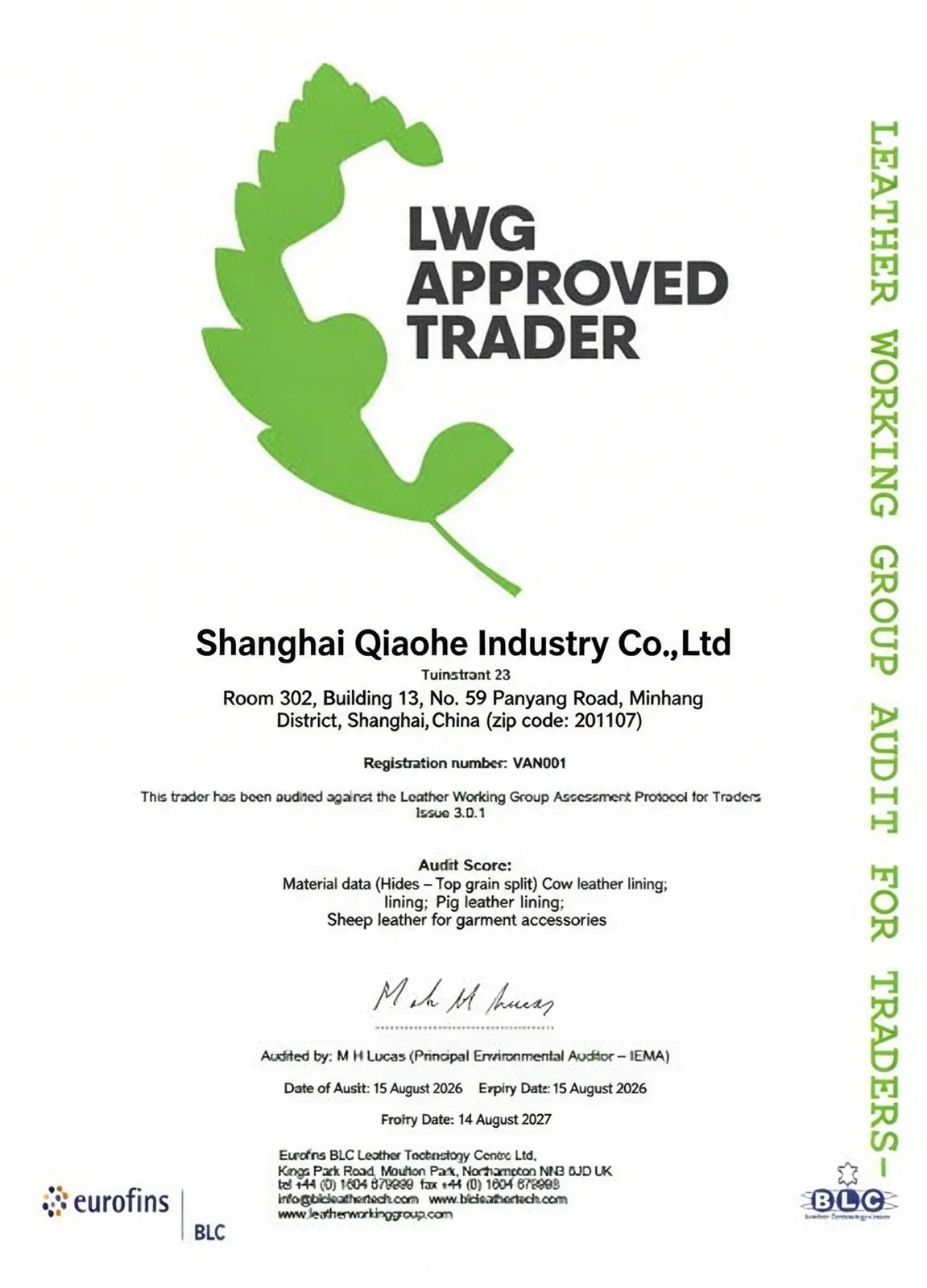
Leather Working Group · LWG

For leather pullers, patches and fastening details, connect the leather source with the relevant manufacturing-site documentation and supplied material. Review the source, leather type, finish and any customer-specific chemical or traceability requirements. A site assessment and a finished-component test answer different questions and are handled within their respective scope.

Official background ↗
FSC® chain-of-custody evidence
CERTIFICATION / PAPER & PACKAGING

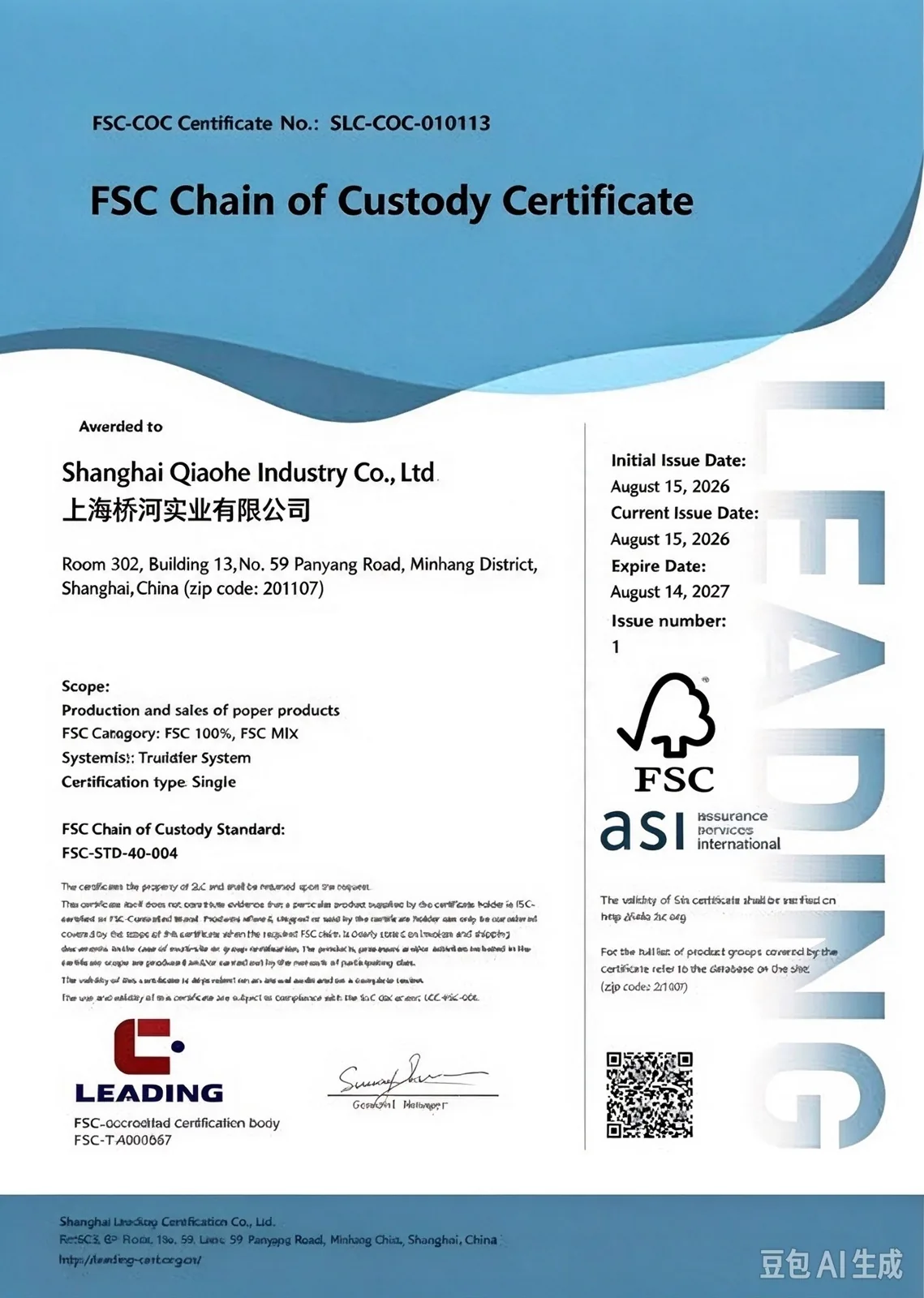
FSC® chain-of-custody evidence

Hangtags, cards and packaging require documentation suited to the selected paper supply chain and requested claim. The material description, covered product group, supplier records and order details should remain connected. Agree any claim wording and label-use requirements before artwork approval and production.

Official background ↗
ISO 9001
ISO 9001
MANAGEMENT SYSTEM / QUALITY

ISO 9001

Quality-management documentation describes the organization, sites, activities and scope covered by a management system. It supports supplier assessment alongside the component specification, approved sample and order controls. For product decisions, review dimensional requirements, appearance criteria, process consistency and relevant component-specific test records separately.

Official background ↗
ISO 14001
ISO 14001
MANAGEMENT SYSTEM / ENVIRONMENT

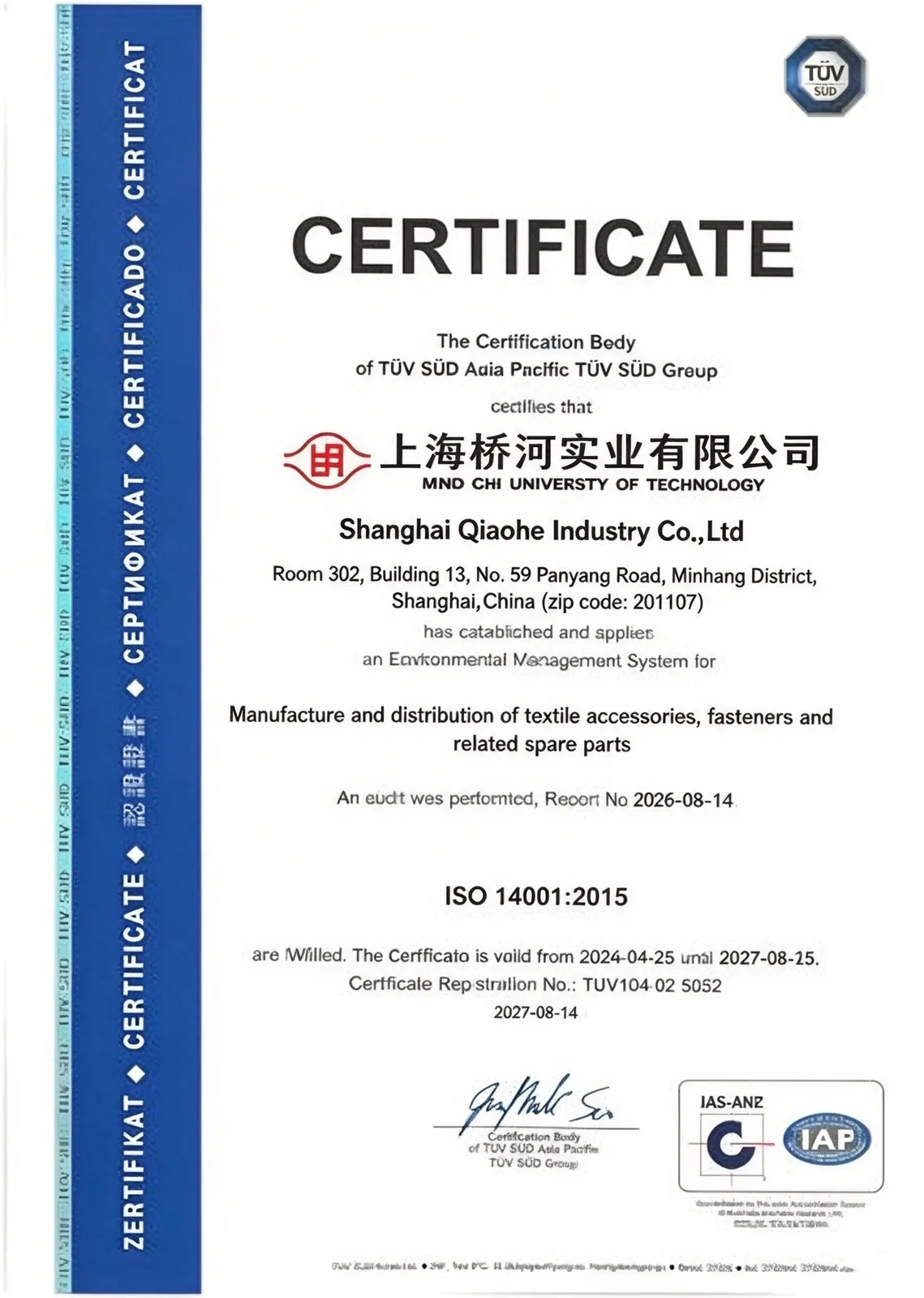
ISO 14001

Environmental-management documentation relates to the named organization, sites and activities. Review its scope as part of supply-chain assessment and keep it separate from the environmental attributes of a particular material or product. Material source, recycled or bio-based content, chemical requirements and end-of-life claims require their own supporting information.

Official background ↗
MATERIAL & MARKET DOCUMENTATION

Requirements with a defined scope.

REACH & material declarations
DOCUMENTATION / CHEMICAL REQUIREMENTS

REACH & material declarations

Chemical requirements are reviewed against the selected material, coating, colour, finish and destination market. A useful documentation set connects the component identity with the applicable substance requirements, declarations and laboratory reports. Share the brand restricted-substance list and intended use early so the requested evidence can be planned around the actual construction.

Official background ↗
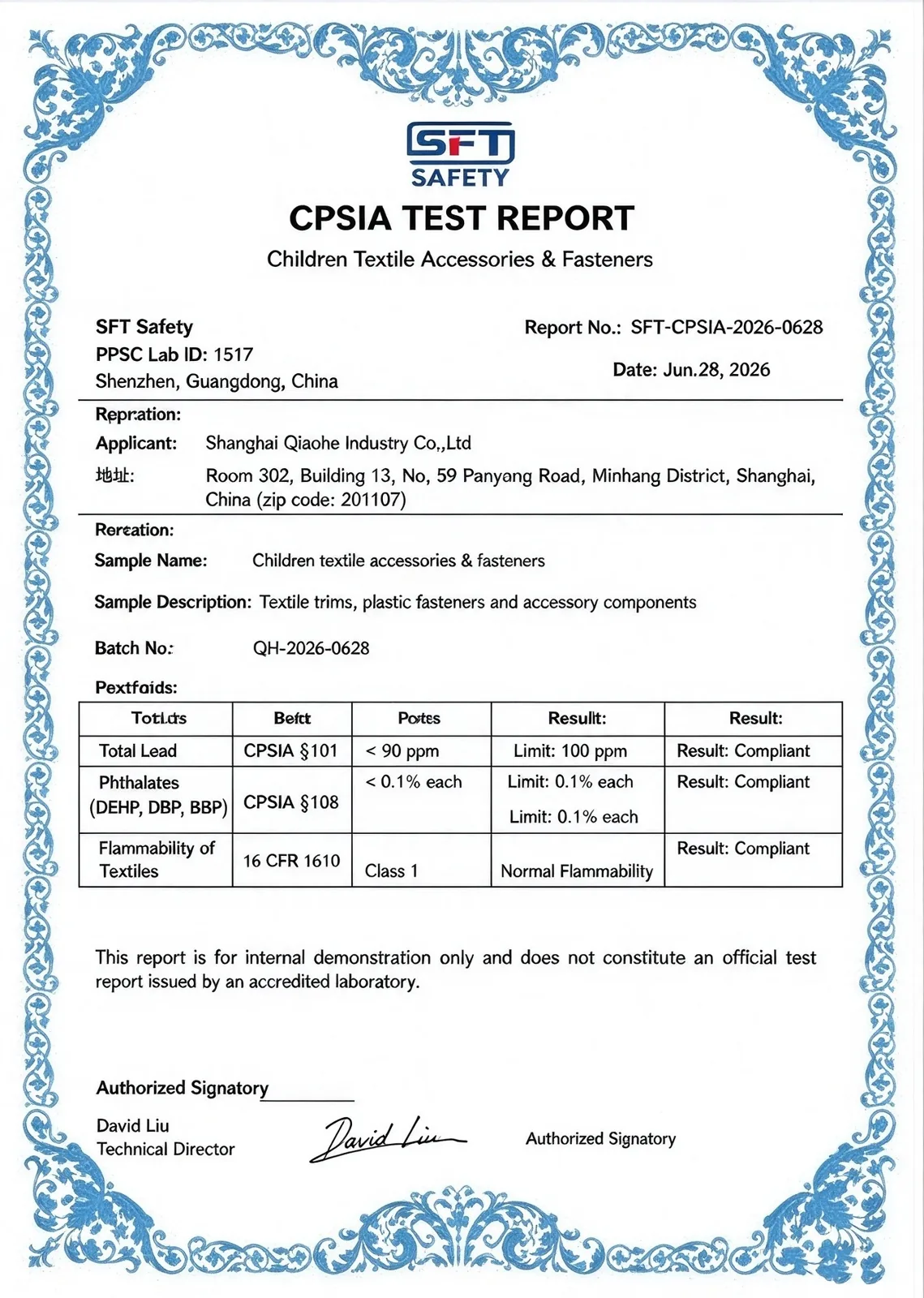
CPSIA-related product evidence
DOCUMENTATION / US CHILDREN’S PRODUCTS

CPSIA-related product evidence

Children’s-product projects require requirements specific to the finished product, age group, market and component construction. Metal finishes, resin details, coatings and small attachment parts may call for different assessments. Agree the responsible party, applicable requirements, sample identity and report scope before approving a component for the intended application.

Official background ↗
DOCUMENTATION / MARKET REQUIREMENTS

California Proposition 65

For products intended for California, review relevant exposure and warning requirements in the context of the finished product and its materials. Component information and laboratory data support the assessment but must be interpreted for the actual use. Confirm the required documentation and any warning decision with the party responsible for the finished product.

Official background ↗
DOCUMENTATION / BRAND REQUIREMENTS

Brand RSL & chemical-management records

A brand restricted-substance brief should identify the applicable version, material groups, limits and evidence required for the project. Match the request to each selected material, finish and colour rather than relying on a general statement. Record the agreed requirements with the component specification and retain the corresponding declarations and reports.

TESTING & APPLICATION REVIEW

Review the component in context.

TESTING / CORROSION

Salt-spray & finish resistance

Corrosion assessment focuses on the selected metal, coating and finish. Define the exposure method, duration, specimen preparation and acceptance criteria before testing zippers, pullers, buckles, snaps or eyelets. Review corrosion, coating change, staining and function against the agreed requirements. Results apply to the identified specimen and test conditions.

TESTING / GARMENT CARE

Washing & care assessment

Assess a trim in the garment construction and care process for which it is intended. Define the washing and drying procedure, temperature, detergent, cycle count and attachment method with the project brief. Compare colour, surface, dimensions, attachment and operation before and after care. Keep the care instruction and assessed sample revision connected.

Official background ↗
TESTING / ATTACHMENT & FUNCTION

Pull strength & repeated operation

Functional assessment starts with the way the component is attached, loaded and operated. Agree the fixture, loading direction, speed, force or cycle requirement and failure criteria for the selected assembly. Review breakage, detachment, deformation and loss of function. Record the tested construction so results can be applied to the relevant design revision.

TESTING / APPEARANCE

Abrasion, rubbing & colour stability

Surface assessments consider the coating or material, contact conditions and the intended garment application. Agree the rubbing medium, load, number of cycles, wet or dry condition and evaluation criteria before testing. Review wear, colour transfer, gloss change and appearance against the approved reference and record any functional effect.

TESTING / NEW MATERIALS

Light, temperature & material response

Responsive and alternative materials require assessment around their intended effect and use. Define the exposure conditions, response and recovery measurements, repeatability and relevant care or durability sequence. Review the visible effect together with attachment, edge condition, stability and component function. Keep each result linked to its material formulation and sample revision.

YOUR PROJECT, YOUR REQUIREMENTS

Discuss the evidence
your product needs.

Discuss quality requirements ↗